
Who Will Remove My IUD? I want it out — so why won’t any doctors do it?
/
Who Will Remove My IUD? I want it out — so why won’t any doctors do it?
By Fran Hoepfner
November 11, 2022 - Gawker
“My understanding of the IUD, as gleaned from a semester of high school sex ed, anecdotal evidence from friends, and various pamphlets collecting dust at my gyno’s office, was that the IUD goes in and then the IUD comes out. You can get the IUD removed when it expires, or whenever you decide that you no longer want it. If you look up any of the popular IUD brands — Mirena, Kyleena, Skyla (beautiful names for girls all around) — the websites rarely, if ever, delve into the removal process. It’s rather primitive, medically speaking: Your doctor looks for the two strings that dangle from the device and with a quick breath — phew — they yank it out.
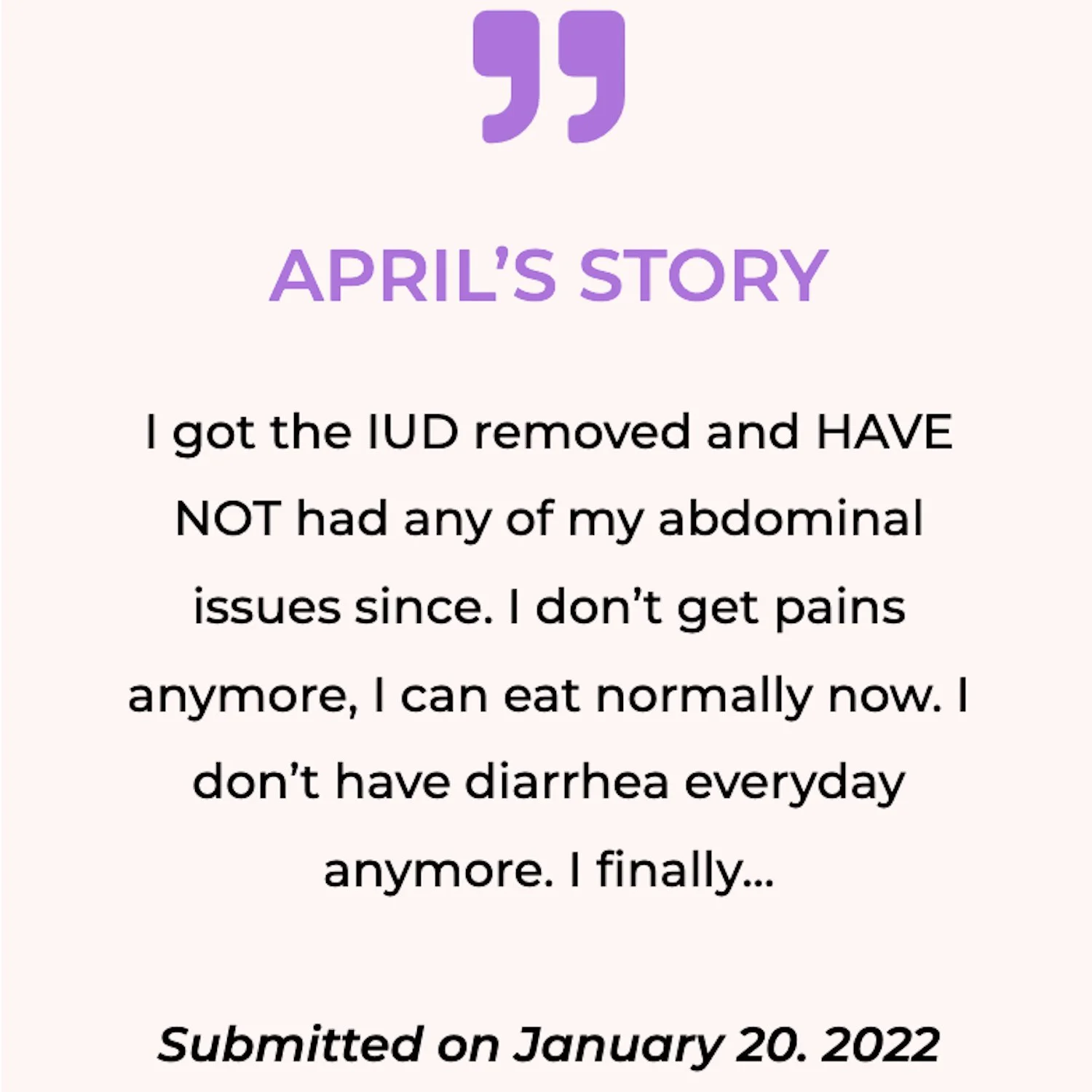
I know people who have had their IUDs removed, and I know that IUD removals do, in fact, occur. But I cannot, for the life of me, get my IUD removed, a decision I started toying with about a year ago that has been calmly, but sternly, rejected by all four of the physicians and gynecologists with whom I’ve spoken about it.
That doctors could just say no to removing my IUD had never crossed my mind as a remote possibility. A New York Times article titled “What to Know Before Getting an IUD” encourages patients to ask their doctors about their “availability” when it comes to IUD removal: “People have a lot of trouble these days making an appointment for any type of care, and [...] it is really frustrating if they can’t have access to removal,” says one Dr. Sarita Sonalkar. I agree that it is frustrating to not have access to a removal, but in my IUD journey, I’ve found that the question isn’t really one of doctor availability — I have no problem getting an appointment — but ultimately one of willingness.”












March 6, 2023
Eat for Life Podcast