
Recovery From An 11 Year IUD Ordeal
/ Guest UserHi everyone. Here's my story.
11 years ago, I had my first child. March of 2013. 2 weeks after, the doctors suggested that I get the Mirena IUD inserted as it would be the best option for after childbirth. Insertion was extremely painful. No pain medicine was prescribed and it was described as a pinch. It was not a pinch. The pain continued for me for 2 weeks. Pain that would send me flailing to the floor. I had an appointment set for a month out from the insertion but I couldn't take it and just walked into to see the doctor. In tears.
They reluctantly did an ultrasound on the spot and found NOTHING. I was sent home after they told me what I was experiencing was "ghost pain" from childbirth and "this sometimes happens when a mother breastfeeds" They told me it likely was rejected by my body and came out in the toilet. Nothing was done for the pain.
June 2020 I had my second child. A big boy. 9.5 lbs at home, in a tub, with the guidance of a midwife. No drugs.
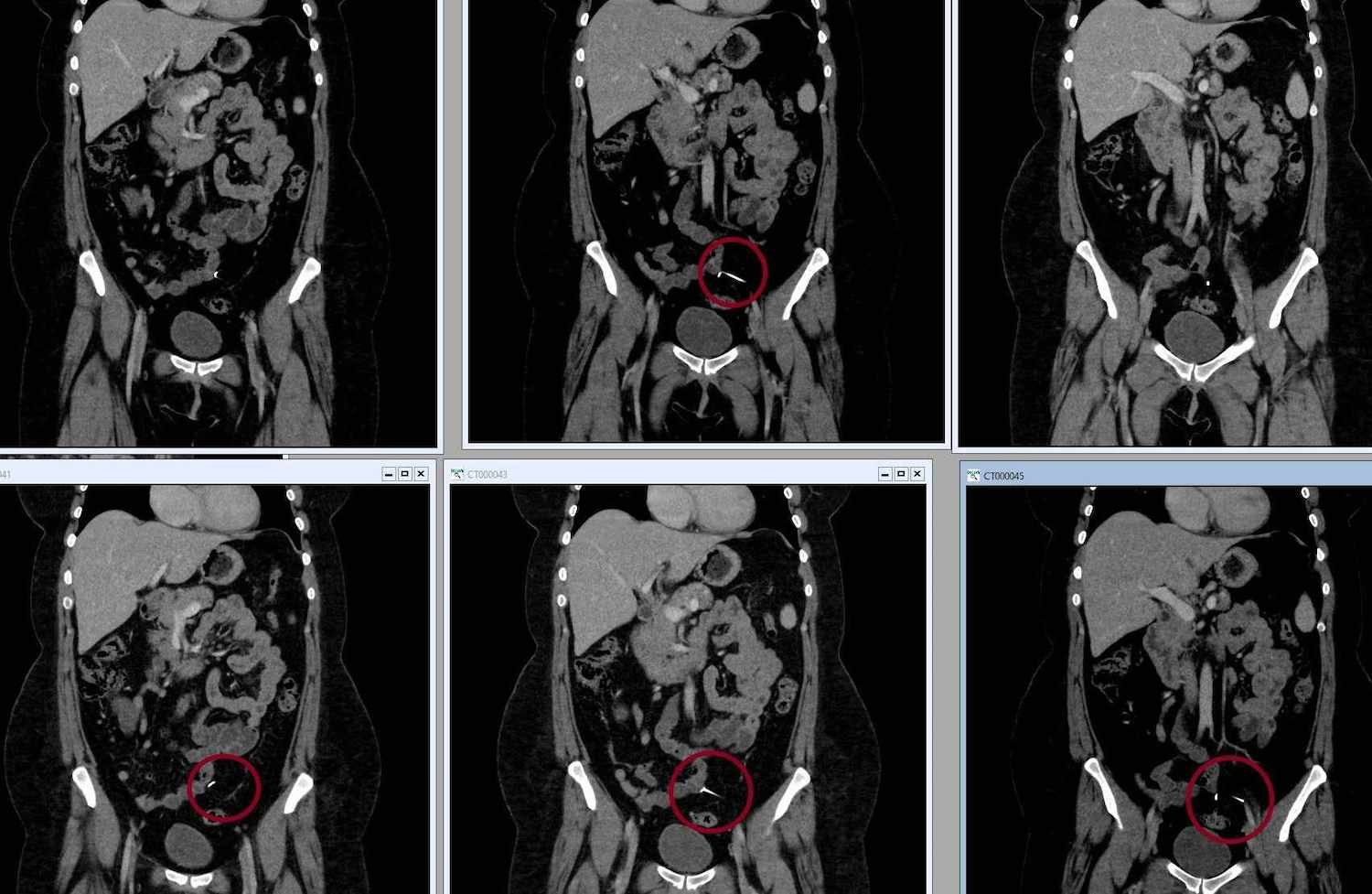
Fast forward to last October 2023. I had a ct scan done on my abdomen to look for kidney stones at a very busy ER. The doctor who looked at the scan, said I had no kidney stones, gave me a prescription for kidney infection, and sent me home.
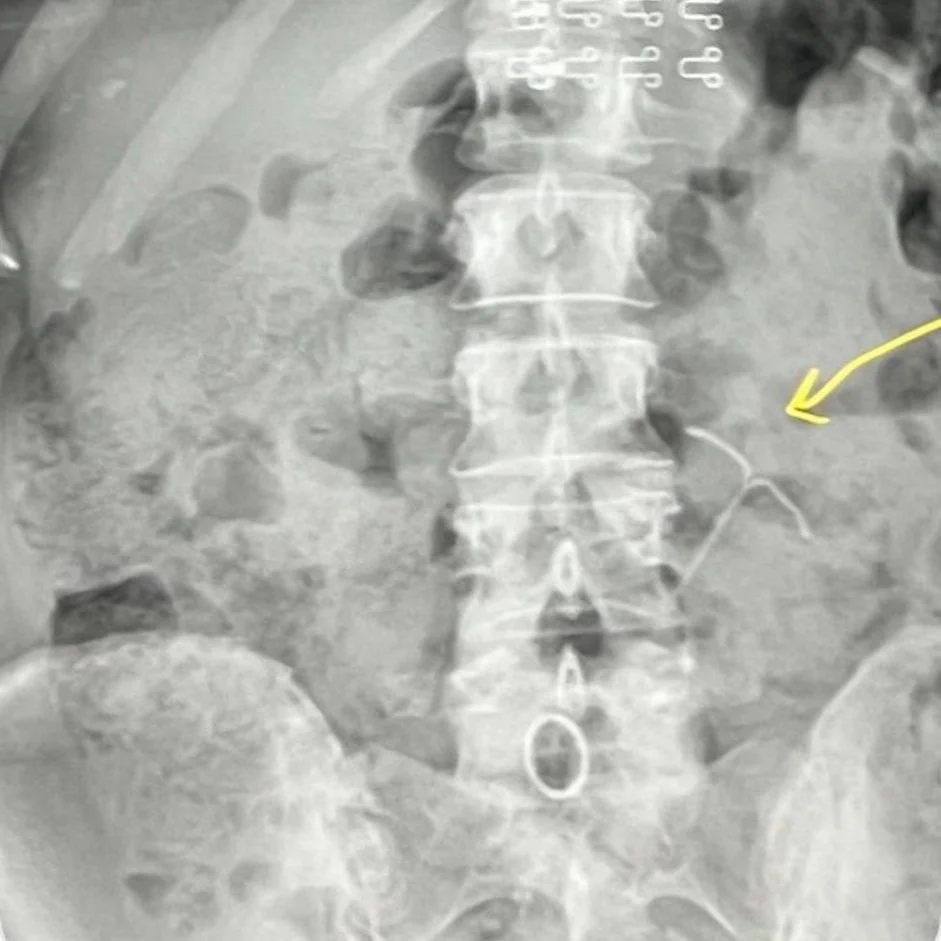
June 2024. I had an appointment with my doctor for hip pain and inflammation. I told her some days its so bad it can't walk. I asked her about PCOS or Endometriosis. She reviewed all my previous records and found one little line that said "IUD device in left pelvic region"
11 years later.
Did you know it could be absorbed and migrate into other organs? I didn't. Apparently, having a retroverted uterus is not good for an IUD.
Please share. Please tell other women.
-Wanda Kay





A 22-year-old G1P1 Caucasian female had hysteroscopic removal of a perforated intrauterine device during which the steroid reservoir of the intrauterine device was lost. Isolated steroid reservoirs are radiolucent on plain film radiography. We located the reservoir in the peritoneal cavity with magnetic resonance imaging and removed it via laparoscopy.

Baseline generalized pelvic pain may not be a risk factor for IUD discontinuation within one year of placement.

A 28-year-old woman presented with a malpositioned intrauterine device (IUD) that was fragmented and significantly entrenched within the cervical canal and myometrium. IUD malposition with concomitant device fragmentation and embedded segments, albeit rare, should be a consideration given the device's prevalence.


The overall perforation rate was 2.1 per 1000 insertions for LNG-IUS users 1.6 per 1000 insertions for copper-IUD users……. LNG-IUS users had a borderline higher risk of perforation compared with copper-IUD users.
Forty-five (58%) of the 77 perforations were associated with suspected risk factors……
Breastfeeding…… and time since delivery remained significant risk factors in perforations detected after 12 months.
No perforations resulted in serious injury to intra-abdominal or pelvic structures.

Intrauterine devices (IUDs) are a commonly used form of contraception worldwide. However, migration of the IUD from its normal position in the uterine fundus is a frequently encountered complication, varying from uterine expulsion to displacement into the endometrial canal to uterine perforation.

“Retracted and detached strings were observed somewhat more often in women wearing Cu-7-IUD's. The number of such cases was, however, not large enough to warrant a statistical comparison.”
Go Fund Me
August 18, 2024