Women's Adverse Reactions to Birth Control
/ Internet Link
Women's Adverse Reactions to Birth Control
By While You Were Out - Viva
March 14, 2022
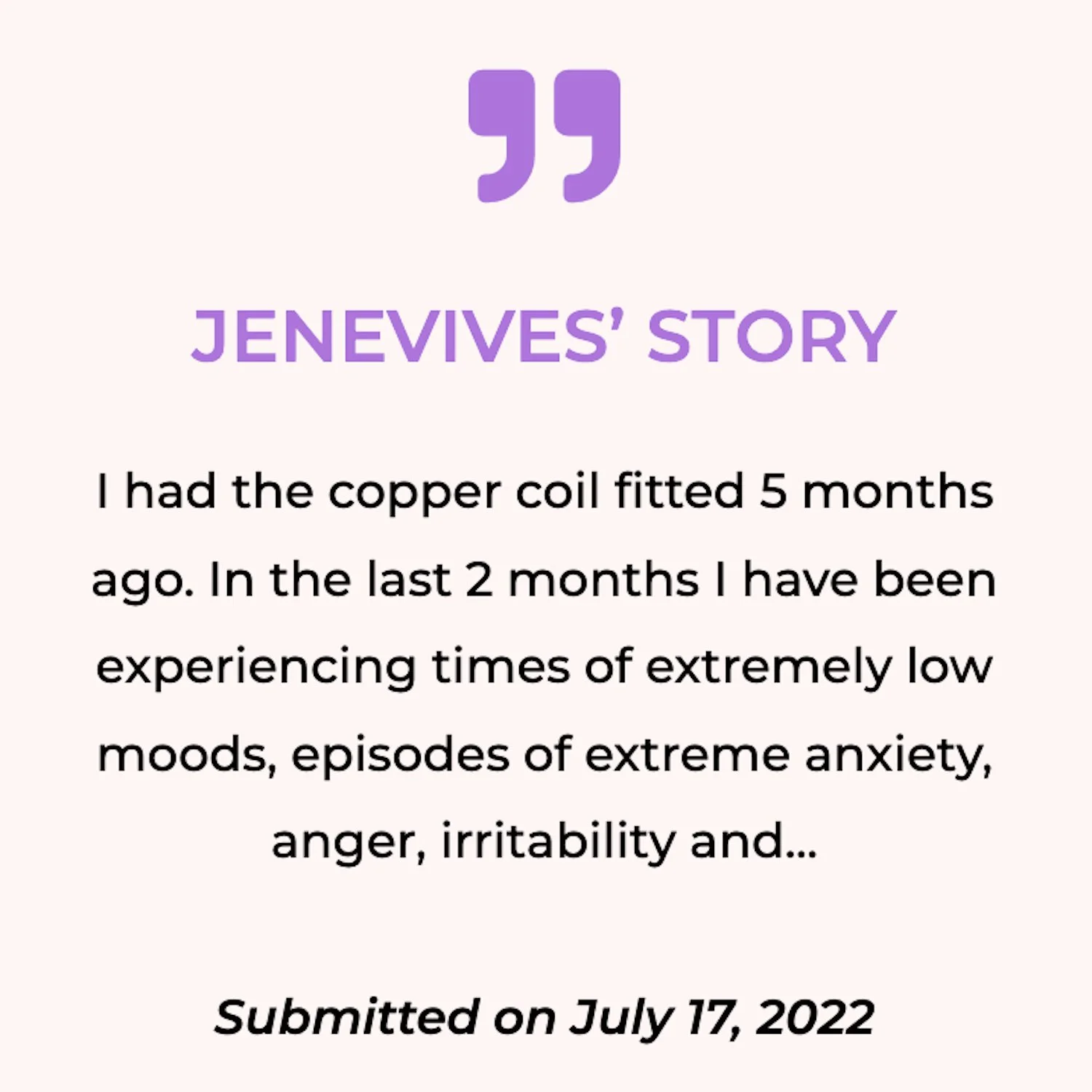
“Complications from intrauterine devices (IUDs), meanwhile, have inspired a movement of their own, with platforms like IUDalert sharing women’s experiences with copper or hormonal IUDs. Reactions to the devices range from severe depression to debilitating pain to suicidal ideation, with some users describing how the insertion of the device into the uterus proved incredibly painful, resulting in heavy bleeding that lasts weeks to months.
One user, Naomi, wrote a testimonial for the website in which she says she “bled every day for almost a whole two years.” Another user shared that she had “pain so severe I couldn’t go to my job or participate in normal activities.” This wasn't the only woman who mentioned the birth-control device affected her ability to work; another shared, “I noticed my sense of intelligence was diminishing, I was no longer contributing to discussions as expected at official meetings. I had low energy, too, and felt withdrawn from my job, which I used to be passionate about!” Another, Andrea, shared that she ended up having a hysterectomy after the IUD wrecked her mental and physical health. Compounding her suffering were the reactions of medical professionals when she described her newfound symptoms “
Does this Story Sound Famiilar?
LIKE,
COMMENT
&/or
SHARE WITH FRIENDS
Tell Your Experience!

DONATE
Your Time
&/or
Resources
to
Support Our Awareness
Effort
With this case, we strengthen previous observations regarding mood changes under LNG-IUS. Moreover, we illustrate that psychiatric symptoms may also occur as ADRs during the subsequent insertion. Thus, we emphasize that psychiatric symptoms have to be clearly communicated as ADRs to patients with LNG-IUS within a written informed consent and should be routinely examined by gynecologists.
Reasons for discontinuation of IUD:
Bleeding Pattern (27.5%), Pain (25%), Weight Gain (5%); Other Reasons (42.5%)
Among women who had their PPCuIUD removed, almost two thirds (64.9%) cited associated side effects like bleeding, pain in abdomen and discharge as the primary reason for removal.
Baseline generalized pelvic pain may not be a risk factor for IUD discontinuation within one year of placement.
“HC (Hormonal Contraception) use significantly increased the odds of ever being diagnosed with depression in all age groups. Women and their providers should balance the risks and benefits of initiating HC. Specifically, younger women, and be advised of the risks that HC presents in terms of a potential association with depression. Efforts to develop standardized protocols for discussing the risk-benefits for HC therapy should be pursued.”
Because adolescents are at higher risk of sexually transmitted infections (STIs), obstetrician–gynecologists should continue to follow standard guidelines for STI screening. They should advise adolescents who choose LARC methods to use male or female condoms consistently (dual method use) to decrease the risk of STIs, including human immunodeficiency virus (HIV). Obstetrician–gynecologists should counsel all sexually active adolescents who do not seek pregnancy on the range of reversible contraceptive methods, including LARC, and should help make these contraceptives readily accessible to them.
Women who are obese may benefit from additional counseling and closer follow-up after IUD placement. Future research is warranted to investigate IUD placement and possible IUD migration among women who are obese.
Tout effet indésirable suspecté d’être lié à l’utilisation du dispositif intra-utérin Mirena peut être signalé, par les patientes ou les professionnels de santé, en tant qu’effet indésirable associé à un médicament sur https://solidarites-sante.gouv.fr/soins-et-maladies/signalement-sante-gouv-fr/ .
The aim of this study was to evaluate the chronic systemic and local toxicity of a copper intrauterine device in a rat model. These results obtained at different dosages and long-term implantation provide solid data confirming the safety of long-term use of Cu-IUDs. However, the elevated leucocyte levels found in this study warrant further investigation.
Includes lots of references to other studies.
Recent clinical trials have identified side effects of LNG-IUD that appear to be systemically mediated, including depressed mood and emotional liability.
Vaginal administration of 0.5-mg nitroglycerin gel 30 min prior to IUD placement does not appear to decrease patient-reported procedural pain among nulliparous women or ease of insertion for providers.
“Compared with oral contraceptives copper IUDs have less severe side effects but less safety at the same time-especially for the younger fertile age group. Therefore they should be offered to young nulliparous women only for a limited period of time.”

Hormones Matter
September 27, 2023