
What does “Rare” mean when talking about IUD Side Effects?
/ Tamara Wilder
I am trying to write up a good balanced response to the numerous people who love to write off or dismiss my experiences (and those of most of the members of this group) by saying that it is "RARE".
What exactly does "rare" mean when you are talking about a device that is being given to over 3 million women?
According to most of the manufacturer information "RARE" seems to be a less than a 1% risk for each of the following serious & life threatening side effects:
Perforations
PID (Pelvic Inflammatory Disease),
Other Life Threatening Infections,
Adhesions,
IUD Pregnancy,
Ectopic Pregnancies &
Strep Infection.
So....even if you are conservative and figure that all of them together total at least a 1% occurrence rate of just these 7 side effects in the total number of women that have gotten IUDs (estimated at at least 3 million women); then they have dramatically affected the lives of at least 30,000 WOMEN.
That is not even counting other "accepted" side effects. By Bayer's own estimation 14% of users get ovarian cysts (420,000 WOMEN) and 3% of users will have them expel (90,000 WOMEN).
That is 510,000 WOMEN having a negative physical response from the device.
Add all of them together and you get an estimated minimum of 540,000 WOMEN out of 3 million that have suffered from PHYSICAL SIDE EFFECTS.
These numbers also do not even take into consideration the long list of MENTAL & EMOTIONAL SIDE EFFECTS like anxiety, depression, insomnia, tinnitus, constant headaches and the OTHER PHYSICAL SYMPTOMS like weight gain and skin rashes etc.... that have been getting repeatedly reported by increasing numbers of women as being directly caused by IUDs.
With those symptoms are taken into account, the total number of women affected negatively could easily top a minimum of 1 MILLION WOMEN.
As these statistics show, the number of women being negatively affected by IUDs is not small, even though it is statistically "rare".
If you get a side effect, then it doesn't matter how rare it is. It is then 100% occurring in your life.
These women have suffered, are still suffering, have as strong desire to warn other women of their experiences and our stories deserve to be heard and taken into account by any woman who is considering getting an IUD.
Thanks for taking the time to read and consider this point of view... which by the way is reflected strongly in my personal experience.
-Tamara Wilder
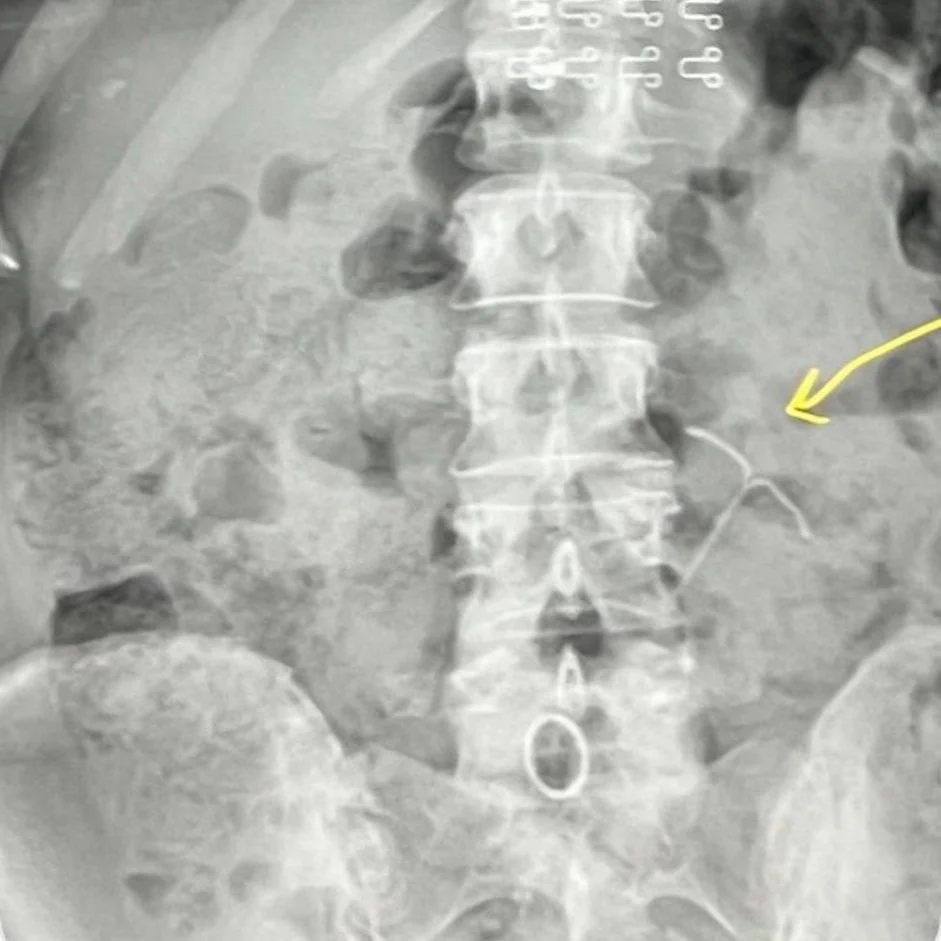
A 22-year-old G1P1 Caucasian female had hysteroscopic removal of a perforated intrauterine device during which the steroid reservoir of the intrauterine device was lost. Isolated steroid reservoirs are radiolucent on plain film radiography. We located the reservoir in the peritoneal cavity with magnetic resonance imaging and removed it via laparoscopy.
Baseline generalized pelvic pain may not be a risk factor for IUD discontinuation within one year of placement.
A 28-year-old woman presented with a malpositioned intrauterine device (IUD) that was fragmented and significantly entrenched within the cervical canal and myometrium. IUD malposition with concomitant device fragmentation and embedded segments, albeit rare, should be a consideration given the device's prevalence.
Because adolescents are at higher risk of sexually transmitted infections (STIs), obstetrician–gynecologists should continue to follow standard guidelines for STI screening. They should advise adolescents who choose LARC methods to use male or female condoms consistently (dual method use) to decrease the risk of STIs, including human immunodeficiency virus (HIV). Obstetrician–gynecologists should counsel all sexually active adolescents who do not seek pregnancy on the range of reversible contraceptive methods, including LARC, and should help make these contraceptives readily accessible to them.
The overall perforation rate was 2.1 per 1000 insertions for LNG-IUS users 1.6 per 1000 insertions for copper-IUD users……. LNG-IUS users had a borderline higher risk of perforation compared with copper-IUD users.
Forty-five (58%) of the 77 perforations were associated with suspected risk factors……
Breastfeeding…… and time since delivery remained significant risk factors in perforations detected after 12 months.
No perforations resulted in serious injury to intra-abdominal or pelvic structures.
The aim of this study was to evaluate the chronic systemic and local toxicity of a copper intrauterine device in a rat model. These results obtained at different dosages and long-term implantation provide solid data confirming the safety of long-term use of Cu-IUDs. However, the elevated leucocyte levels found in this study warrant further investigation.
Includes lots of references to other studies.
Intrauterine devices (IUDs) are a commonly used form of contraception worldwide. However, migration of the IUD from its normal position in the uterine fundus is a frequently encountered complication, varying from uterine expulsion to displacement into the endometrial canal to uterine perforation.
“Retracted and detached strings were observed somewhat more often in women wearing Cu-7-IUD's. The number of such cases was, however, not large enough to warrant a statistical comparison.”

Natural Womanhood
August 24, 2024