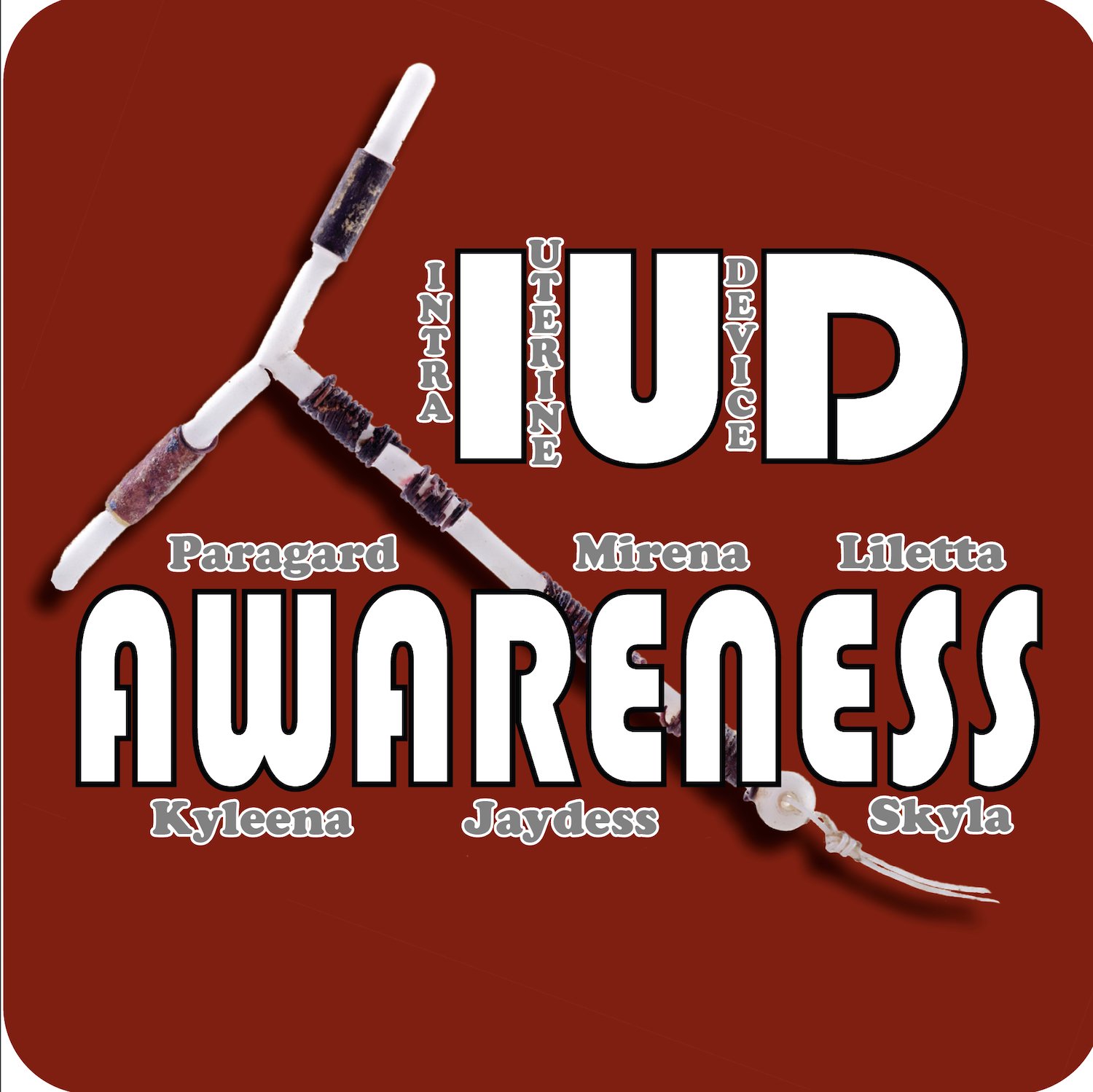

Medical & Social Studies
There are hundreds and hundreds of official studies that have been done dating back to the 1970’s when the first IUDs were really beginning to take hold.
Nonetheless, they can be elusive and hard to find.
This page is devoted to making them accessible to anyone who is interested in reading the details.
The sections are divided into a variety of categories, some of which are further sorted by specific groupings by similar topic or symptom.
Clicking on either the red, yellow and green square links or the words in the tagcloud will take you to those studies in the main database.
Each study is also linked to long lists of references or related studies which can keep going and going.
To go even further, search the journal sites for keywords and discover even more!
Know about a study not shown here?
Please fill out this form and tell us about it!


Each of us experiences our particular mosaic of problems or issues; so each study is tagged for all topics that it discusses.
Studies with multiple tags will therefore appear repeatedly under different groupings and they are marked by the colors of a traffic light to indicate the severity or frequency of the problems discussed.
RED for “problematic”, YELLOW for “considered safe but problems mentioned”, GREEN for “no problems or positive results” and GREY for “inconclusive”.
Click the topic in the TAG-CLOUD to access all studies with that tag.
Insertion


Because adolescents are at higher risk of sexually transmitted infections (STIs), obstetrician–gynecologists should continue to follow standard guidelines for STI screening. They should advise adolescents who choose LARC methods to use male or female condoms consistently (dual method use) to decrease the risk of STIs, including human immunodeficiency virus (HIV). Obstetrician–gynecologists should counsel all sexually active adolescents who do not seek pregnancy on the range of reversible contraceptive methods, including LARC, and should help make these contraceptives readily accessible to them.

Vaginal administration of 0.5-mg nitroglycerin gel 30 min prior to IUD placement does not appear to decrease patient-reported procedural pain among nulliparous women or ease of insertion for providers.
Safety Concerns

The collective evidence, including that from a large high-quality RCT, does not indicate an increased risk of HIV acquisition among users of Cu-IUDs. human immunodeficiency virus; intrauterine devices.

Standard IUDs (copper/gold) can be considered as conditional for MR safety at 1.5 T and 3.0 T, demonstrating at wbSAR up to 4W/kg and a magnetic field gradient of up to 40T/m with minimal imaging artifacts. The stainless steel IUD, however, induces unacceptable artifacts and is potentially harmful to patients during MRI due to high magnetic dislocation forces and torque (MR unsafe).
Because adolescents are at higher risk of sexually transmitted infections (STIs), obstetrician–gynecologists should continue to follow standard guidelines for STI screening. They should advise adolescents who choose LARC methods to use male or female condoms consistently (dual method use) to decrease the risk of STIs, including human immunodeficiency virus (HIV). Obstetrician–gynecologists should counsel all sexually active adolescents who do not seek pregnancy on the range of reversible contraceptive methods, including LARC, and should help make these contraceptives readily accessible to them.

Recent levonorgestrel-IUD use may be associated with CIN2, a lesion with a high rate of regression, but not CIN3, which is considered a true pre-cancerous lesion. The observed association between levonorgestrel-IUDs and CIN2+ was modest but warrants further investigation. It may have clinical importance for contraceptive counseling if this finding is shown to be consistent across other studies and other populations.

Women who are obese may benefit from additional counseling and closer follow-up after IUD placement. Future research is warranted to investigate IUD placement and possible IUD migration among women who are obese.

The overall perforation rate was 2.1 per 1000 insertions for LNG-IUS users 1.6 per 1000 insertions for copper-IUD users……. LNG-IUS users had a borderline higher risk of perforation compared with copper-IUD users.
Forty-five (58%) of the 77 perforations were associated with suspected risk factors……
Breastfeeding…… and time since delivery remained significant risk factors in perforations detected after 12 months.
No perforations resulted in serious injury to intra-abdominal or pelvic structures.

The aim of this study was to evaluate the chronic systemic and local toxicity of a copper intrauterine device in a rat model. These results obtained at different dosages and long-term implantation provide solid data confirming the safety of long-term use of Cu-IUDs. However, the elevated leucocyte levels found in this study warrant further investigation.
Includes lots of references to other studies.

Emotional Problems

With this case, we strengthen previous observations regarding mood changes under LNG-IUS. Moreover, we illustrate that psychiatric symptoms may also occur as ADRs during the subsequent insertion. Thus, we emphasize that psychiatric symptoms have to be clearly communicated as ADRs to patients with LNG-IUS within a written informed consent and should be routinely examined by gynecologists.

“HC (Hormonal Contraception) use significantly increased the odds of ever being diagnosed with depression in all age groups. Women and their providers should balance the risks and benefits of initiating HC. Specifically, younger women, and be advised of the risks that HC presents in terms of a potential association with depression. Efforts to develop standardized protocols for discussing the risk-benefits for HC therapy should be pursued.”

Tout effet indésirable suspecté d’être lié à l’utilisation du dispositif intra-utérin Mirena peut être signalé, par les patientes ou les professionnels de santé, en tant qu’effet indésirable associé à un médicament sur https://solidarites-sante.gouv.fr/soins-et-maladies/signalement-sante-gouv-fr/ .

Recent clinical trials have identified side effects of LNG-IUD that appear to be systemically mediated, including depressed mood and emotional liability.
With this case, we strengthen previous observations regarding mood changes under LNG-IUS. Moreover, we illustrate that psychiatric symptoms may also occur as ADRs during the subsequent insertion. Thus, we emphasize that psychiatric symptoms have to be clearly communicated as ADRs to patients with LNG-IUS within a written informed consent and should be routinely examined by gynecologists.
“HC (Hormonal Contraception) use significantly increased the odds of ever being diagnosed with depression in all age groups. Women and their providers should balance the risks and benefits of initiating HC. Specifically, younger women, and be advised of the risks that HC presents in terms of a potential association with depression. Efforts to develop standardized protocols for discussing the risk-benefits for HC therapy should be pursued.”
Tout effet indésirable suspecté d’être lié à l’utilisation du dispositif intra-utérin Mirena peut être signalé, par les patientes ou les professionnels de santé, en tant qu’effet indésirable associé à un médicament sur https://solidarites-sante.gouv.fr/soins-et-maladies/signalement-sante-gouv-fr/ .
Recent clinical trials have identified side effects of LNG-IUD that appear to be systemically mediated, including depressed mood and emotional liability.


Progestin-only methods including the progestin-only pill (POP), levonorgestrel (LNG) IUD, etonorgestrel implant or depot medroxyprogesterone acetate (DMPA) have the potential to negatively affect mood symptoms for women with or without baseline mood disorders, including PMDD. Careful counseling and close follow-up is recommended for patients with PMDD seeking these contraceptive methods.
Physical Problems


Women using intrauterine devices (IUDs) may be at increased risk for producing autoantibodies related to the risk of developing rheumatoid arthritis (RA), according to new research.

Reasons for discontinuation of IUD:
Bleeding Pattern (27.5%), Pain (25%), Weight Gain (5%); Other Reasons (42.5%)

Among women who had their PPCuIUD removed, almost two thirds (64.9%) cited associated side effects like bleeding, pain in abdomen and discharge as the primary reason for removal.

Baseline generalized pelvic pain may not be a risk factor for IUD discontinuation within one year of placement.
Because adolescents are at higher risk of sexually transmitted infections (STIs), obstetrician–gynecologists should continue to follow standard guidelines for STI screening. They should advise adolescents who choose LARC methods to use male or female condoms consistently (dual method use) to decrease the risk of STIs, including human immunodeficiency virus (HIV). Obstetrician–gynecologists should counsel all sexually active adolescents who do not seek pregnancy on the range of reversible contraceptive methods, including LARC, and should help make these contraceptives readily accessible to them.
Women who are obese may benefit from additional counseling and closer follow-up after IUD placement. Future research is warranted to investigate IUD placement and possible IUD migration among women who are obese.
The aim of this study was to evaluate the chronic systemic and local toxicity of a copper intrauterine device in a rat model. These results obtained at different dosages and long-term implantation provide solid data confirming the safety of long-term use of Cu-IUDs. However, the elevated leucocyte levels found in this study warrant further investigation.
Includes lots of references to other studies.

“Compared with oral contraceptives copper IUDs have less severe side effects but less safety at the same time-especially for the younger fertile age group. Therefore they should be offered to young nulliparous women only for a limited period of time.”

....The strongest data appear to be the deleterious effects of levonorgestrel-releasing IUDs on percent lean and fat body mass.
….Use of the levonorgestrel-releasing IUD, commonly used to treat abnormal bleeding in the perimenopause, increased the risk of developing breast cancer in postmenopausal women
Recent levonorgestrel-IUD use may be associated with CIN2, a lesion with a high rate of regression, but not CIN3, which is considered a true pre-cancerous lesion. The observed association between levonorgestrel-IUDs and CIN2+ was modest but warrants further investigation. It may have clinical importance for contraceptive counseling if this finding is shown to be consistent across other studies and other populations.

Among women who had their PPCuIUD removed, almost two thirds (64.9%) cited associated side effects like bleeding, pain in abdomen and discharge as the primary reason for removal.
“Compared with oral contraceptives copper IUDs have less severe side effects but less safety at the same time-especially for the younger fertile age group. Therefore they should be offered to young nulliparous women only for a limited period of time.”
Baseline generalized pelvic pain may not be a risk factor for IUD discontinuation within one year of placement.
Because adolescents are at higher risk of sexually transmitted infections (STIs), obstetrician–gynecologists should continue to follow standard guidelines for STI screening. They should advise adolescents who choose LARC methods to use male or female condoms consistently (dual method use) to decrease the risk of STIs, including human immunodeficiency virus (HIV). Obstetrician–gynecologists should counsel all sexually active adolescents who do not seek pregnancy on the range of reversible contraceptive methods, including LARC, and should help make these contraceptives readily accessible to them.
Women who are obese may benefit from additional counseling and closer follow-up after IUD placement. Future research is warranted to investigate IUD placement and possible IUD migration among women who are obese.

“Compared with oral contraceptives copper IUDs have less severe side effects but less safety at the same time-especially for the younger fertile age group. Therefore they should be offered to young nulliparous women only for a limited period of time.”
Tout effet indésirable suspecté d’être lié à l’utilisation du dispositif intra-utérin Mirena peut être signalé, par les patientes ou les professionnels de santé, en tant qu’effet indésirable associé à un médicament sur https://solidarites-sante.gouv.fr/soins-et-maladies/signalement-sante-gouv-fr/ .

Jaydess should be used with caution after specialist advice, or removal should be considered in women with existing or new severe headache, migraine, jaundice, severe arterial disease such as stroke or myocardial infarction, or marked increase in blood pressure.
Jaydess should be used with caution after specialist advice, or removal should be considered in women with existing or new severe headache, migraine, jaundice, severe arterial disease such as stroke or myocardial infarction, or marked increase in blood pressure.

“Retracted and detached strings were observed somewhat more often in women wearing Cu-7-IUD's. The number of such cases was, however, not large enough to warrant a statistical comparison.”
Reasons for discontinuation of IUD:
Bleeding Pattern (27.5%), Pain (25%), Weight Gain (5%); Other Reasons (42.5%)
Among women who had their PPCuIUD removed, almost two thirds (64.9%) cited associated side effects like bleeding, pain in abdomen and discharge as the primary reason for removal.
Baseline generalized pelvic pain may not be a risk factor for IUD discontinuation within one year of placement.
The aim of this study was to evaluate the chronic systemic and local toxicity of a copper intrauterine device in a rat model. These results obtained at different dosages and long-term implantation provide solid data confirming the safety of long-term use of Cu-IUDs. However, the elevated leucocyte levels found in this study warrant further investigation.
Includes lots of references to other studies.
“Compared with oral contraceptives copper IUDs have less severe side effects but less safety at the same time-especially for the younger fertile age group. Therefore they should be offered to young nulliparous women only for a limited period of time.”

A 22-year-old G1P1 Caucasian female had hysteroscopic removal of a perforated intrauterine device during which the steroid reservoir of the intrauterine device was lost. Isolated steroid reservoirs are radiolucent on plain film radiography. We located the reservoir in the peritoneal cavity with magnetic resonance imaging and removed it via laparoscopy.
Baseline generalized pelvic pain may not be a risk factor for IUD discontinuation within one year of placement.

A 28-year-old woman presented with a malpositioned intrauterine device (IUD) that was fragmented and significantly entrenched within the cervical canal and myometrium. IUD malposition with concomitant device fragmentation and embedded segments, albeit rare, should be a consideration given the device's prevalence.
The overall perforation rate was 2.1 per 1000 insertions for LNG-IUS users 1.6 per 1000 insertions for copper-IUD users……. LNG-IUS users had a borderline higher risk of perforation compared with copper-IUD users.
Forty-five (58%) of the 77 perforations were associated with suspected risk factors……
Breastfeeding…… and time since delivery remained significant risk factors in perforations detected after 12 months.
No perforations resulted in serious injury to intra-abdominal or pelvic structures.

Intrauterine devices (IUDs) are a commonly used form of contraception worldwide. However, migration of the IUD from its normal position in the uterine fundus is a frequently encountered complication, varying from uterine expulsion to displacement into the endometrial canal to uterine perforation.
“Retracted and detached strings were observed somewhat more often in women wearing Cu-7-IUD's. The number of such cases was, however, not large enough to warrant a statistical comparison.”


Because adolescents are at higher risk of sexually transmitted infections (STIs), obstetrician–gynecologists should continue to follow standard guidelines for STI screening. They should advise adolescents who choose LARC methods to use male or female condoms consistently (dual method use) to decrease the risk of STIs, including human immunodeficiency virus (HIV). Obstetrician–gynecologists should counsel all sexually active adolescents who do not seek pregnancy on the range of reversible contraceptive methods, including LARC, and should help make these contraceptives readily accessible to them.
The aim of this study was to evaluate the chronic systemic and local toxicity of a copper intrauterine device in a rat model. These results obtained at different dosages and long-term implantation provide solid data confirming the safety of long-term use of Cu-IUDs. However, the elevated leucocyte levels found in this study warrant further investigation.
Includes lots of references to other studies.
Jaydess should be used with caution after specialist advice, or removal should be considered in women with existing or new severe headache, migraine, jaundice, severe arterial disease such as stroke or myocardial infarction, or marked increase in blood pressure.
Jaydess should be used with caution after specialist advice, or removal should be considered in women with existing or new severe headache, migraine, jaundice, severe arterial disease such as stroke or myocardial infarction, or marked increase in blood pressure.
Tout effet indésirable suspecté d’être lié à l’utilisation du dispositif intra-utérin Mirena peut être signalé, par les patientes ou les professionnels de santé, en tant qu’effet indésirable associé à un médicament sur https://solidarites-sante.gouv.fr/soins-et-maladies/signalement-sante-gouv-fr/ .
Reasons for discontinuation of IUD:
Bleeding Pattern (27.5%), Pain (25%), Weight Gain (5%); Other Reasons (42.5%)
....The strongest data appear to be the deleterious effects of levonorgestrel-releasing IUDs on percent lean and fat body mass.
….Use of the levonorgestrel-releasing IUD, commonly used to treat abnormal bleeding in the perimenopause, increased the risk of developing breast cancer in postmenopausal women
Pregnancy

There are no randomized trials and evidence ranges in quality, but evidence for the embryo formation and loss in 4.5 percent of IUD users exists in good-quality research. Further research is needed to compare embryo loss in IUD users to loss in controls.

Pregnancies in women who conceive with a removed or retained copper IUD are at an increased risk for short-term adverse perinatal outcomes, especially preterm delivery. For pregnancies that continued to at least 22 weeks, we found no benefit in IUD removal. However, the risk of long-term neuropsychiatric hospitalizations is not increased among offspring of these women.
Baseline generalized pelvic pain may not be a risk factor for IUD discontinuation within one year of placement.
Jaydess should be used with caution after specialist advice, or removal should be considered in women with existing or new severe headache, migraine, jaundice, severe arterial disease such as stroke or myocardial infarction, or marked increase in blood pressure.
“Compared with oral contraceptives copper IUDs have less severe side effects but less safety at the same time-especially for the younger fertile age group. Therefore they should be offered to young nulliparous women only for a limited period of time.”
Removal

This study describes the reasons for IUD self-removal as documented in internet forums by IUD users discussing self-removal.

In our current climate focused on improving access to IUDs, it is essential to address and reduce barriers to IUD removal when desired, in order to preserve reproductive autonomy.

No conclusions can be made regarding the clinical utility of routine pathology for removed intrauterine devices or cost-effectiveness of routine pathology for therapeutic abortion or removed intrauterine devices, due to the lack of literature identified for these questions. No guidelines regarding routine pathology for removed intrauterine devices were identified. As such, no conclusion can be made.
Reasons for discontinuation of IUD:
Bleeding Pattern (27.5%), Pain (25%), Weight Gain (5%); Other Reasons (42.5%)
A 22-year-old G1P1 Caucasian female had hysteroscopic removal of a perforated intrauterine device during which the steroid reservoir of the intrauterine device was lost. Isolated steroid reservoirs are radiolucent on plain film radiography. We located the reservoir in the peritoneal cavity with magnetic resonance imaging and removed it via laparoscopy.
Baseline generalized pelvic pain may not be a risk factor for IUD discontinuation within one year of placement.
A 28-year-old woman presented with a malpositioned intrauterine device (IUD) that was fragmented and significantly entrenched within the cervical canal and myometrium. IUD malposition with concomitant device fragmentation and embedded segments, albeit rare, should be a consideration given the device's prevalence.

We found that women's perceptions of how their method affects their sex life were associated with contraceptive continuation over time. Sexual acceptability should receive more attention in both contraceptive research and counseling.

IUD self-removal is an option that some patients may be interested in. Addressing concerns about safety may make self-removal more appealing to some patients. Addressing physicians' concern about "hasty" removal may require additional training so that providers are better able to support patients' decision-making around contraceptive use. Implications: The option of self-removal could have a positive impact on reproductive autonomy and patient-decision making.
Because adolescents are at higher risk of sexually transmitted infections (STIs), obstetrician–gynecologists should continue to follow standard guidelines for STI screening. They should advise adolescents who choose LARC methods to use male or female condoms consistently (dual method use) to decrease the risk of STIs, including human immunodeficiency virus (HIV). Obstetrician–gynecologists should counsel all sexually active adolescents who do not seek pregnancy on the range of reversible contraceptive methods, including LARC, and should help make these contraceptives readily accessible to them.

LARC methods such as etonogestrel contraceptive implants and IUDs provide effective pregnancy prevention, but discontinuation rates are higher among adolescents and young women than among adults.

We encourage contraceptive counseling and removal protocols that directly address historical reproductive injustices and that honor patients' wishes.

Post Removal
With this case, we strengthen previous observations regarding mood changes under LNG-IUS. Moreover, we illustrate that psychiatric symptoms may also occur as ADRs during the subsequent insertion. Thus, we emphasize that psychiatric symptoms have to be clearly communicated as ADRs to patients with LNG-IUS within a written informed consent and should be routinely examined by gynecologists.

Given the current gap in the literature and trends in LNG-IUD use in nulliparous young women, studies are needed that specifically look at the interaction of nulliparity, long-term use of LNG-IUD, and return to normal fertility. Herein, we review the available literature on the mechanism of action of IUDs with a specific focus on the effect on endometrial gene expression profile changes associated with IUDs.
Given the current gap in the literature and trends in LNG-IUD use in nulliparous young women, studies are needed that specifically look at the interaction of nulliparity, long-term use of LNG-IUD, and return to normal fertility. Herein, we review the available literature on the mechanism of action of IUDs with a specific focus on the effect on endometrial gene expression profile changes associated with IUDs.
Case Reports
With this case, we strengthen previous observations regarding mood changes under LNG-IUS. Moreover, we illustrate that psychiatric symptoms may also occur as ADRs during the subsequent insertion. Thus, we emphasize that psychiatric symptoms have to be clearly communicated as ADRs to patients with LNG-IUS within a written informed consent and should be routinely examined by gynecologists.
A 22-year-old G1P1 Caucasian female had hysteroscopic removal of a perforated intrauterine device during which the steroid reservoir of the intrauterine device was lost. Isolated steroid reservoirs are radiolucent on plain film radiography. We located the reservoir in the peritoneal cavity with magnetic resonance imaging and removed it via laparoscopy.
A 28-year-old woman presented with a malpositioned intrauterine device (IUD) that was fragmented and significantly entrenched within the cervical canal and myometrium. IUD malposition with concomitant device fragmentation and embedded segments, albeit rare, should be a consideration given the device's prevalence.
Social Issues
This study describes the reasons for IUD self-removal as documented in internet forums by IUD users discussing self-removal.

Among participants, the intrauterine device (IUD) was viewed particularly unfavourably. Furthermore, LARC was shown to be only considered for use after dissatisfaction with shorter-term methods (usually the Pill) if at all. Overall, these findings suggest further education in dispelling myths and discomfort around LARC use, while simultaneously recognizing and respecting women’s decisions to not use LARC methods.

“No other contraceptive method has undergone so rapid and thorough a change of medical reputation as that experienced by intrauterine devices over the past few years.” These words from United States-based contraceptive researcher Christopher Tietze in 1966 also characterize the last 10 years in the United States.”
IUD self-removal is an option that some patients may be interested in. Addressing concerns about safety may make self-removal more appealing to some patients. Addressing physicians' concern about "hasty" removal may require additional training so that providers are better able to support patients' decision-making around contraceptive use. Implications: The option of self-removal could have a positive impact on reproductive autonomy and patient-decision making.
Because adolescents are at higher risk of sexually transmitted infections (STIs), obstetrician–gynecologists should continue to follow standard guidelines for STI screening. They should advise adolescents who choose LARC methods to use male or female condoms consistently (dual method use) to decrease the risk of STIs, including human immunodeficiency virus (HIV). Obstetrician–gynecologists should counsel all sexually active adolescents who do not seek pregnancy on the range of reversible contraceptive methods, including LARC, and should help make these contraceptives readily accessible to them.

Most young women at risk of unintended pregnancy are not aware of IUD as emergency contraception and look to their providers for trusted information. Contraceptive education should explicitly address IUD as emergency contraception.

We aimed to characterize changes in out-of-pocket costs for IUD placement before and after mandated coverage of contraceptive services and to examine whether changes in these costs influence IUD use.
We encourage contraceptive counseling and removal protocols that directly address historical reproductive injustices and that honor patients' wishes.
Promotion & Recruitment Efforts
Among participants, the intrauterine device (IUD) was viewed particularly unfavourably. Furthermore, LARC was shown to be only considered for use after dissatisfaction with shorter-term methods (usually the Pill) if at all. Overall, these findings suggest further education in dispelling myths and discomfort around LARC use, while simultaneously recognizing and respecting women’s decisions to not use LARC methods.
We found that women's perceptions of how their method affects their sex life were associated with contraceptive continuation over time. Sexual acceptability should receive more attention in both contraceptive research and counseling.
Most young women at risk of unintended pregnancy are not aware of IUD as emergency contraception and look to their providers for trusted information. Contraceptive education should explicitly address IUD as emergency contraception.
We encourage contraceptive counseling and removal protocols that directly address historical reproductive injustices and that honor patients' wishes.
- 2018
- Abdominal Pain
- Abnormal Bleeding
- Access
- Allergies
- Anaphylaxis
- Anxiety & Depression
- Auto-immune Disease
- Back Pain
- Bacterial Vaginosis (BV)
- Bleeding
- blood clots
- Brain Fog
- Brain Swelling
- breast cancer
- Breastfeeding
- Cancer
- cervical cancer
- Choice
- Choking
- Coercion
- Copper 7
- Copper T
- Copper Toxicity
- Cost
- Difficulty Swallowing
- Digestive Issues
- Discharge
- Early Removal
- eczema
- Endometrial Cancer
- Expulsion
- Fatigue
- Fear
- Fertility
- Gene Mutation
- Gravigard
- hair loss
- Headache & Migraine
- Heart Palpitations
- High Blood Pressure
- HIV
- Improvement after Removal
- Increase in Use
- Inflammation
- Informed Consent
- Internet Forums
- Intolerences
- Irritability & Mood Changes
- Jaydess
- Kyleena
- Lung Cancer
- Menopausal Symptoms
- Migration
- Mirena
- Missing Strings
- MRI
- Muscle Pains & Aches
- Non-Use
- osteoporosis
- Ovarian Cancer
- Pain
- Pancreatic Cancer
- Paragard
- Paranoia
- Pelvic Pain
- Perforation
- PID & Infections
- Placement
- PMDD
- Post-Abortion
- Postpartum Insertion
- pregnancy
- Prostaglandins
- Rashes
- Reproductive Justice
- Rheumatoid Arthritis (RA)
- Self Removal
- Sex Life
- sexual dysfunction
- Shortness of Breath
- Skin Problems & Jaundice
- Skyla
- STI Risk
- Stroke & Heart Attack
- suicide
- Surgical Removal
- Tubal Ligation
- Vertigo & Dizziness
- Weight Gain
Lots of references to studies about Copper IUDs .